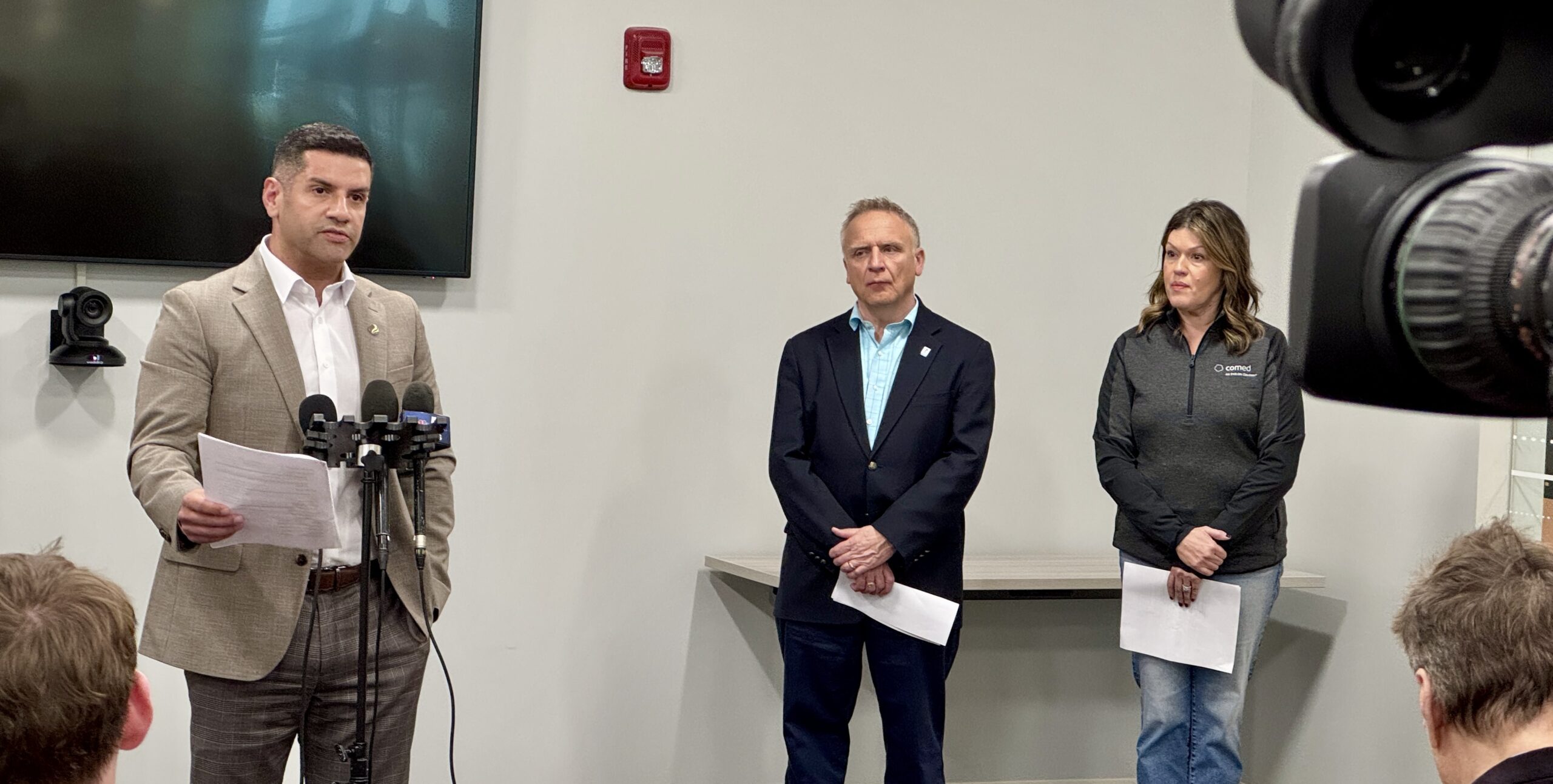
Waukegan — The holiday season brings shopping, gatherings, travel and tons of general busyness. With so many distractions, scammers often see an opportunity to take advantage of utility customers by pressuring them into handing over money or personal information. Today is Utility Scam Awareness Day, and North Shore Gas and Peoples Gas joined ComEd and the Better Business Bureau (BBB) of Chicago and Northern Illinois at a news conference to urge families and businesses to stay alert for impostors. The scammers may call, text, email or show up at your door claiming to represent a utility. They often create a false sense of urgency, including threats to immediately disconnect service, to pressure customers and steal from them.
The message from North Shore Gas is simple: slow down and verify. Taking a moment to question a suspicious request, and verify if it’s legitimate, can help customers protect their money and personal information.
North Shore Gas will never, under any circumstance, demand immediate payment. Utility scams often rely on urgency and fear. A scammer may pose as a utility employee, claim a customer’s account is past due and threaten to immediately disconnect service unless a payment is made. Others may seek personal or financial information, demand payment through prepaid cards, cryptocurrency, or third-party payment apps, or show up at a customer’s door pretending to be a utility worker.
“Scams are getting more sophisticated with new technologies. They are engineered to look and sound just like your trusted utility. Take a moment to think things through and verify contacts,” said Peter Muntaner, Manager of Contact and Support Centers and Claims — North Shore and Peoples Gas. “If you don’t feel right about what the person is saying or if they’re pressuring you in any way, end the conversation. Hang up the phone, close the door, don’t respond to the email. Contacting your utility directly is a great way to confirm legitimacy.”
The BBB reminds customers and businesses to remain vigilant when someone claiming to represent a utility appears at their home or business and threatens to turn off service unless an immediate payment is made.
“Today’s utility scammers are becoming increasingly sophisticated, using convincing caller IDs, official-looking messages and even personal account information to make their schemes appear legitimate,” said Steve Bernas, president and CEO of the Better Business Bureau of Chicago and Northern Illinois. “Consumers should understand that a familiar company name on their phone or a professional-looking message is no guarantee they’re dealing with the real utility. Never let the appearance of legitimacy replace independent verification.”
Know the signs of a utility scam
North Shore Gas encourages customers to watch for common tactics, including:
- Threats of immediate disconnection. A caller claims your account is overdue and says your utility service will be shut off unless you pay within a short period.
- Demands for unusual payment methods. Scammers may demand payment through prepaid cash or gift cards, cryptocurrency or third-party payment apps.
- Requests for sensitive information. Scammers may ask for Social Security numbers, driver’s license information, bank information or other personal details.
- Door-to-door impostors. Someone posing as a utility employee may appear at a home or business asking for money or account information. Previous scam warnings have also cautioned that an impostor may attempt to lure a customer outside while another individual enters the property.
- Digital scams. Customers should also be alert to suspicious contacts through texts, emails and online or social media channels as scammers expand beyond traditional phone and door-to-door schemes.
- AI tactics. Scammers are increasingly using advanced artificial intelligence (AI) to generate highly convincing fake outage and past-due text message alerts. Stay alert and verify any unexpected requests before taking action.
- Spoofing: Spoofed phone numbers make calls appear to come from a trusted source like North Shore Gas or someone else. Don’t rely on caller ID or a familiar-looking number. If pressured for payment or personal information, stop and verify using a phone number or website you know is legitimate.
- Pressure to act immediately. Threatening or aggressive tactics designed to prevent customers from pausing to verify a request are a major warning sign.
Slow Down and Verify
Customers should never provide Social Security, banking or other personal information to someone who unexpectedly contacts them claiming to represent a utility. If someone visits a home or business claiming to be a utility field representative, customers should ask to see company identification before allowing the person inside. You can also call the utility at a number you know is real to ask if the person is who they say they are.
Customers who believe they have experienced fraud should end the interaction and contact local authorities, followed by their utility using a trusted contact number.